
Routine cleaning is often seen as a chore that steals time from more enjoyable activities. In reality, small and regular cleaning tasks reduce the need for exhausting deep cleans and stressful catch-up sessions. By handling minor messes as they appear, indoor spaces stay more comfortable, safer, and easier to manage. This approach focuses on prevention, using simple habits to stop dirt and clutter from growing into larger problems.
Indoor environments change constantly as people cook, relax, work, and move through their day. Dust settles, crumbs fall, moisture builds up, and items slowly drift out of place. When these changes are ignored, they combine into messes that take hours or days to fix. Routine cleaning breaks this cycle by keeping small issues small.
The Principle Behind Routine Cleaning
Routine cleaning works because it limits buildup. Dirt, grease, and clutter are easier to remove when they are fresh and thin rather than thick and hardened. A quick wipe or sweep takes far less effort than scrubbing layers that have been ignored for weeks. This principle applies to nearly every area of an indoor space.
Another important idea is consistency. Cleaning a little every day or every few days spreads effort evenly across time. Instead of facing one overwhelming task, routine cleaning creates a steady rhythm that feels manageable. This rhythm reduces stress and makes cleaning feel like a normal part of daily life rather than a punishment.
Small Actions Add Up
Many people underestimate how powerful small actions can be. Wiping a counter for thirty seconds or returning items to their place may not feel significant. Over days and weeks, however, these actions prevent layers of mess from forming. The result is a space that rarely feels out of control.
Small actions also lower mental resistance. Starting a tiny task feels easier than committing to a long cleaning session. Once the habit is formed, the effort becomes almost automatic, reducing the need for motivation or planning.
Daily Habits That Prevent Big Messes
Daily habits form the foundation of routine cleaning. These habits are short, simple, and often done while other activities are already in progress. They do not require special tools or large blocks of time. Instead, they fit naturally into existing routines.
By focusing on daily habits, indoor spaces receive constant care. This steady attention prevents sudden mess explosions that can happen after days of neglect. Over time, these habits create a noticeable difference in how a home looks and feels.
Cleaning as You Go
Cleaning as you go is one of the most effective habits for preventing mess. This approach means wiping spills right away, rinsing dishes after use, and putting items back when finished. It reduces the chance for stains, odors, and clutter to settle in.
This habit also saves time later. A sink with rinsed dishes takes minutes to wash, while a sink full of dried food can take much longer. The same idea applies to countertops, tables, and work areas throughout indoor spaces.
Five-Minute Resets
Short reset sessions help keep rooms from drifting into chaos. A five-minute reset might include picking up items, straightening cushions, or clearing surfaces. These quick efforts restore order without requiring a full clean.
Five-minute resets are especially helpful in shared spaces. Living rooms, kitchens, and entryways collect items quickly. Regular resets keep these areas welcoming and functional throughout the day.
Kitchen Maintenance and Prevention
The kitchen is one of the fastest areas to become messy because it combines food, moisture, and frequent use. Routine cleaning in the kitchen focuses on stopping grease, crumbs, and spills from hardening. Small efforts after each use prevent long scrubbing sessions later.
When kitchen cleaning becomes routine, cooking feels easier and more enjoyable. Clean surfaces and tools reduce frustration and help maintain a safer food environment. This makes routine kitchen care a practical investment of time.
Countertops and Cooking Surfaces
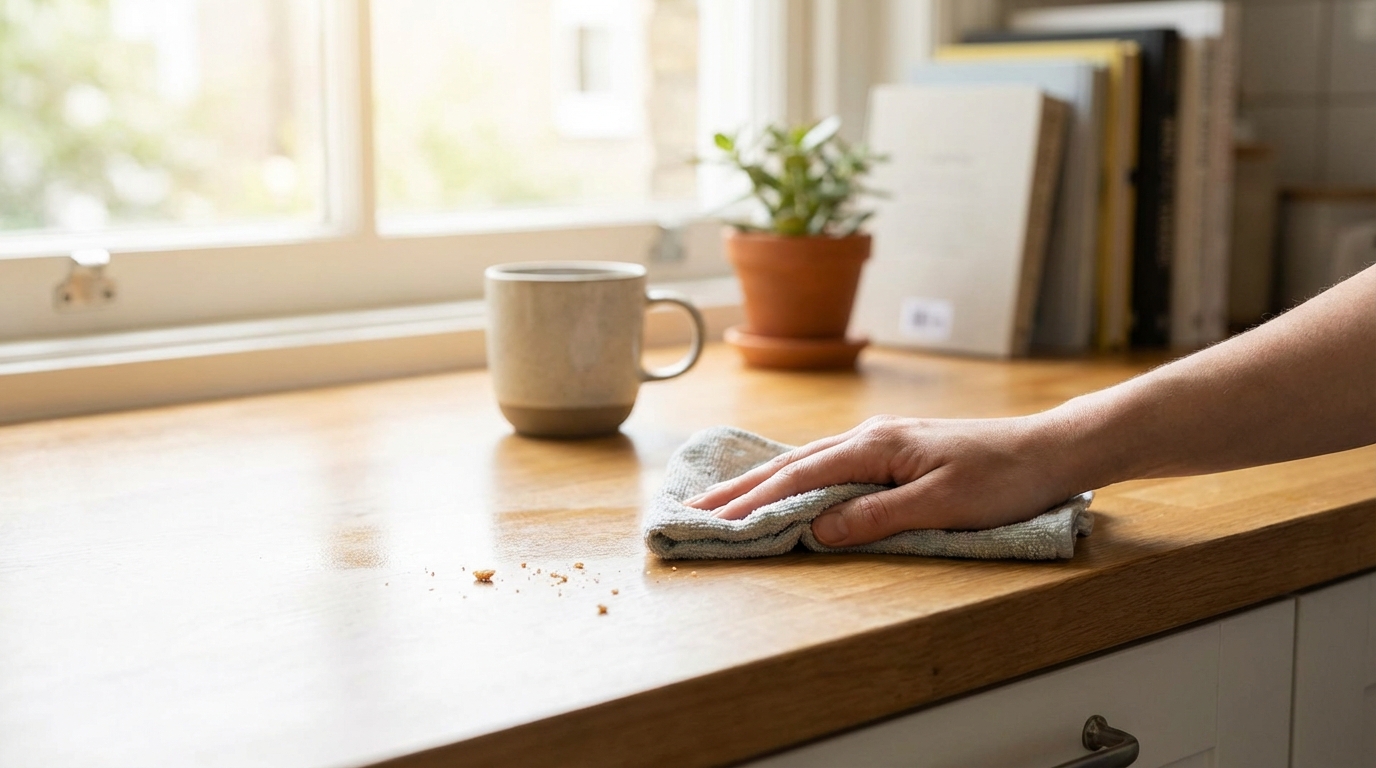
Wiping countertops after each meal or food preparation session keeps them free from sticky residue. Fresh spills lift easily with a damp cloth, while dried spills may require strong cleaners. Regular wiping also prevents stains from forming on porous surfaces.
Cooking surfaces benefit from quick attention as well. Grease splatters on stovetops harden quickly when heated repeatedly. Removing them soon after cooking keeps the surface smooth and easier to maintain.
Dishes and Sink Care
Dishes left in the sink create visual clutter and unpleasant odors. Rinsing or loading them into a dishwasher right away prevents food from drying and sticking. This habit makes the actual washing process faster and more pleasant.
The sink itself also benefits from routine care. A quick rinse and wipe remove residue that can cause stains or buildup. Over time, this prevents the need for harsh cleaners or heavy scrubbing.
Bathroom Cleaning Made Easier
Bathrooms are exposed to moisture, soap, and daily use, making them prime areas for buildup. Routine cleaning helps control mold, soap scum, and mineral deposits. Small tasks done frequently keep surfaces fresh and hygienic.
By addressing moisture and residue early, bathroom cleaning becomes simpler and less time-consuming. This approach also helps extend the life of fixtures and finishes, reducing the need for repairs.
Managing Moisture Daily
Moisture is the main driver of bathroom problems. Wiping down wet surfaces after showers reduces water spots and slows mold growth. This task takes seconds but has a lasting impact.
Keeping moisture under control also improves air quality. Less mold and mildew mean fewer odors and a more comfortable indoor environment.
Quick Surface Wipes
Bathroom sinks, counters, and toilet surfaces benefit from frequent light cleaning. A quick wipe removes toothpaste splatter, soap residue, and fingerprints. These marks are much easier to remove when fresh.
Routine surface care reduces the need for strong chemicals. Gentle cleaning done often keeps surfaces looking clean without aggressive scrubbing.
Floor Care Through Routine Attention
Floors collect dust, dirt, and debris from daily movement. When ignored, this debris gets ground in and becomes harder to remove. Routine floor care keeps dirt from embedding itself into surfaces.
Regular attention also protects flooring materials. Whether carpet, tile, or wood, floors last longer when abrasive particles are removed frequently.
Sweeping and Vacuuming Lightly
Light sweeping or vacuuming several times a week removes surface dirt before it spreads. This is especially important in high-traffic areas. Short sessions prevent the need for heavy-duty cleaning later.
Frequent light cleaning also improves indoor comfort. Floors feel cleaner underfoot, and dust levels in the air are reduced.
Spot Cleaning Spills
Spills left on floors can stain or damage surfaces. Cleaning them as soon as they happen prevents long-term marks. Even water spills can cause issues if left to sit.
Spot cleaning takes very little time and avoids the need for full floor treatments. This habit is especially helpful in kitchens, dining areas, and entryways.
Controlling Dust and Indoor Air
Dust is a constant presence indoors, settling on surfaces and floating in the air. Routine cleaning helps manage dust before it accumulates. This improves both appearance and air quality.
By addressing dust regularly, indoor spaces feel fresher and require less intensive cleaning. This is particularly helpful for people sensitive to allergens.
Regular Surface Dusting
Light dusting every few days keeps surfaces looking clean and prevents thick layers from forming. Thin dust lifts easily, while heavy dust may smear or spread. Frequent dusting avoids this problem.
This habit also protects furniture and electronics. Dust buildup can affect finishes and ventilation over time.
Airflow and Vent Maintenance
Vents and fans collect dust that can circulate back into rooms. Wiping or vacuuming these areas periodically reduces airborne particles. This task is often overlooked but highly effective.
Cleaner airflow supports a healthier indoor environment. Routine vent care prevents the need for deep cleaning or professional services later.
Laundry Habits That Reduce Overwhelm
Laundry becomes overwhelming when it piles up. Routine laundry habits spread the work across the week. This approach keeps clothing manageable and storage areas organized.
By preventing large piles, routine laundry saves both time and energy. It also reduces stress associated with sorting and folding massive loads.
Smaller, Frequent Loads
Washing smaller loads more often makes laundry easier to handle. Clothes clean faster and dry more evenly. Folding and putting away also feel less tiring.
This habit prevents clothing from sitting dirty for long periods. It also reduces wrinkles and odors.
Immediate Put-Away Routine
Putting clothes away right after drying prevents clutter from spreading. Clean laundry left out often becomes mixed with dirty items. This creates confusion and extra work.
An immediate put-away routine keeps storage areas functional. It also saves time spent searching for clothes later.
Managing Clutter Before It Grows
Clutter builds slowly as items are set down without being returned. Routine tidying stops this process early. Small actions keep spaces usable and calm.
Clutter control is not about perfection. It focuses on maintaining function and reducing visual noise that can feel overwhelming.
Daily Item Returns
Returning items to their proper place each day prevents piles from forming. This habit takes little time but has a strong impact. It keeps surfaces clear and storage organized.
Daily returns also make cleaning easier. Clear surfaces are faster to wipe and maintain.
Regular Paper and Object Sorting
Papers, packages, and small objects accumulate quickly. Sorting them regularly prevents overflow. This task can be done in short sessions.
Routine sorting reduces the need for large decluttering projects. It also helps important items stay visible and accessible.
Using the Right Tools for Routine Cleaning
Routine cleaning works best when tools are easy to access. Simple, effective tools encourage frequent use. Complicated setups can discourage small cleaning efforts.
Keeping tools nearby reduces barriers. When cleaning is convenient, it happens more often.
Simple and Accessible Supplies
Basic supplies like cloths, mild cleaners, and small brooms support quick tasks. These items do not require preparation or cleanup. Their simplicity makes routine cleaning easier to start.
Accessible supplies also reduce decision fatigue. When tools are ready, the task feels straightforward.
Tool Maintenance
Cleaning tools need care as well. Rinsing cloths and emptying vacuums keep them effective. Well-maintained tools work better and last longer.
This small effort prevents the frustration of using dirty or broken equipment. It supports the overall routine.
Time and Energy Savings Over the Long Term
Routine cleaning spreads effort evenly, reducing the need for intense cleaning sessions. This saves time over weeks and months. Small tasks replace long, exhausting chores.
Energy savings are just as important. Light daily work is easier on the body than heavy scrubbing. This makes cleaning more sustainable.
Reduced Decision Fatigue
When cleaning is routine, fewer decisions are needed. Tasks happen automatically at set times. This reduces mental effort.
Lower decision fatigue makes it easier to maintain habits. Cleaning becomes part of the day rather than a major event.
Predictable Maintenance
Routine cleaning creates predictable maintenance needs. Surfaces rarely reach extreme levels of dirt. This predictability simplifies planning.
Predictable tasks feel less stressful. They fit smoothly into daily schedules.
Health and Comfort Benefits Indoors
Routine cleaning supports a healthier indoor environment. Reduced dust, mold, and bacteria improve comfort. These benefits affect daily life in subtle but meaningful ways.
Cleaner spaces also feel more inviting. Comfort increases when surroundings are well cared for.
Lower Allergen Levels
Regular cleaning reduces allergens like dust and pet dander. This can ease breathing and irritation. Small efforts have ongoing health benefits.
Lower allergen levels also improve sleep and relaxation. Indoor comfort improves throughout the day.
Improved Mental Clarity
Clean and organized spaces support mental focus. Visual order reduces distraction. Routine cleaning helps maintain this clarity.
A calm environment supports productivity and rest. This benefit grows with consistent habits.
Financial Benefits of Preventive Cleaning
Routine cleaning protects surfaces and belongings. Preventing damage reduces repair and replacement costs. Small efforts preserve value over time.
This approach also reduces the need for professional services. Many issues can be avoided with regular care.
Extending the Life of Materials
Floors, fixtures, and furniture last longer when cleaned routinely. Dirt and moisture cause wear when left unattended. Preventive care slows this process.
Longer-lasting materials save money. Routine cleaning acts as low-cost maintenance.
Avoiding Costly Repairs
Ignoring small messes can lead to bigger problems. Water damage, stains, and buildup may require repairs. Routine cleaning reduces these risks.
Preventing problems is often cheaper than fixing them. This makes routine cleaning a practical financial choice.