
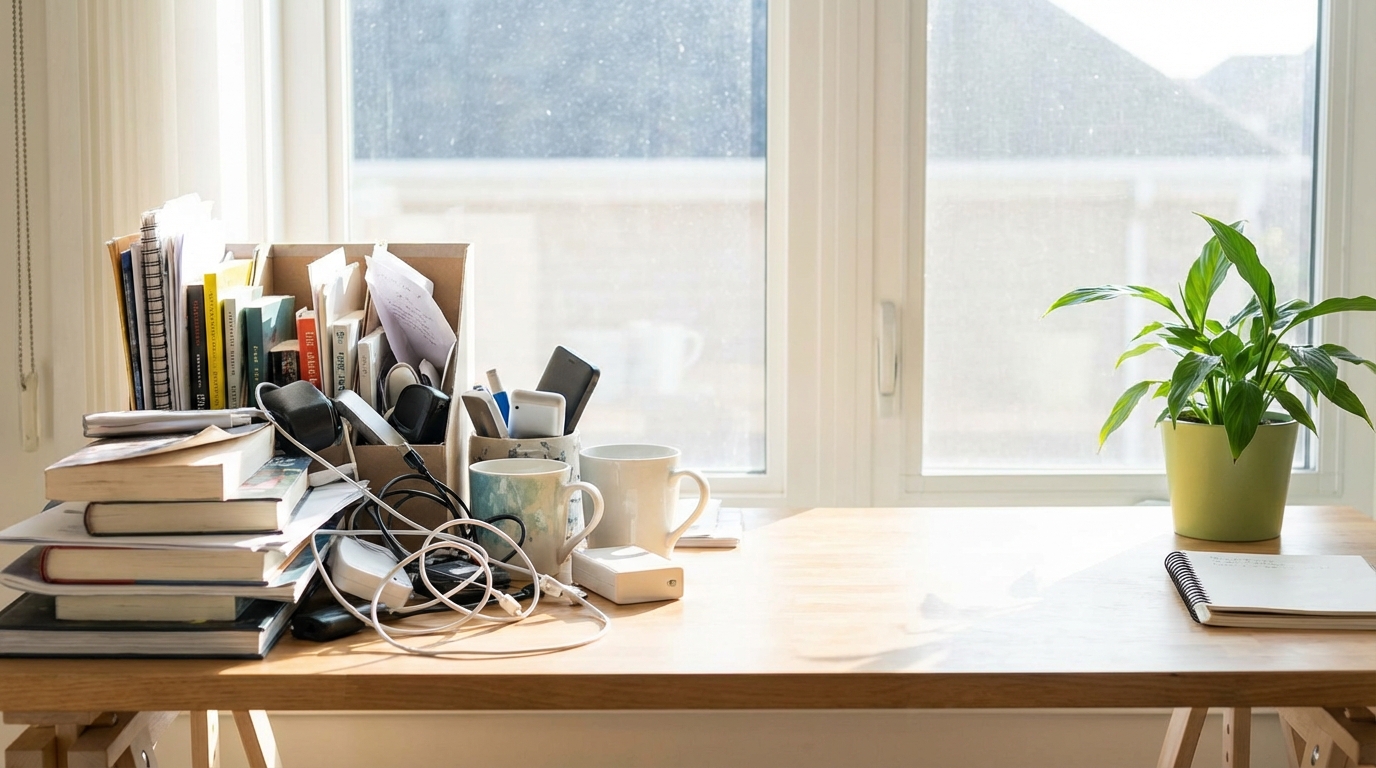
Visual clutter is a common part of indoor life, especially in homes, offices, classrooms, and shared spaces. It refers to an environment filled with many visible items that compete for attention, such as stacks of papers, decorations, open storage, cables, furniture, and mixed colors or patterns. While each object may seem harmless on its own, together they can create a space that feels mentally exhausting. Many people describe this feeling as being overwhelmed, distracted, or unable to relax.
The sense of overload caused by visual clutter is not just a personal preference or a matter of taste. It is closely linked to how the human brain processes visual information and manages attention. Indoor environments, where people spend a large portion of their time, play a strong role in shaping mood, focus, and energy levels. Understanding why clutter feels overwhelming helps explain common reactions to busy spaces and sheds light on how visual environments affect everyday life.
How the Brain Processes Visual Information
The human brain is constantly taking in information from the eyes, even when a person is not actively focusing on their surroundings. Every object, color, shape, and movement in a room sends signals that the brain must sort and interpret. This process happens automatically and cannot be fully turned off. As a result, visually crowded spaces demand more mental effort than calmer environments.
When there are too many items in view, the brain struggles to decide what deserves attention and what can be ignored. This sorting process uses mental resources that could otherwise be used for thinking, problem-solving, or resting. Over time, the extra effort required to process clutter can lead to feelings of fatigue and mental strain. The environment itself becomes a source of ongoing stimulation that is difficult to escape indoors.
Automatic Attention and Visual Pull
Certain objects naturally draw attention because of their color, contrast, or novelty. In a cluttered room, many items compete for this automatic attention at the same time. The eyes may jump from one object to another without conscious control. This constant shifting can make it harder to maintain focus on a single task.
Because attention is limited, each visual distraction reduces the amount available for purposeful activities. Even when a person believes they are ignoring clutter, the brain is still working behind the scenes to filter it out. This hidden effort contributes to the sense of being mentally overwhelmed, especially during tasks that require concentration.
Visual Clutter and Cognitive Load
Cognitive load refers to the amount of mental effort being used at a given moment. Visual clutter increases cognitive load by adding extra information that must be processed, even if it is not directly relevant. Indoor spaces filled with objects demand constant interpretation, such as identifying items, judging their importance, and tracking their locations.
When cognitive load is high, thinking becomes slower and more error-prone. Simple tasks may feel harder than usual, and complex tasks may feel exhausting. Visual clutter acts like background noise for the brain, making it more difficult to think clearly. Over time, this can lead to frustration and a desire to escape the space.
Working Memory and Limited Capacity
Working memory is the mental space used to hold and manipulate information for short periods. It has a limited capacity, meaning it can only manage a small amount of information at once. Visual clutter competes for this limited space by introducing unrelated details that the brain must briefly register.
When working memory is crowded, it becomes harder to follow instructions, remember what was just read, or keep track of steps in a task. This effect is especially noticeable in indoor environments used for learning or work. A cluttered setting can quietly undermine performance without any obvious cause.
The Emotional Impact of Cluttered Spaces
Visual clutter does not only affect thinking; it also influences emotions. Many people report feeling stressed, anxious, or irritable in crowded indoor environments. These emotional reactions are often subtle at first but can build over time with repeated exposure. The environment sends constant signals that demand attention, leaving little room for emotional rest.
Stress responses can be triggered when the brain perceives an environment as chaotic or unpredictable. Clutter can create a sense of unfinished business, as visible items may represent tasks that need attention. This can lead to a lingering feeling of pressure, even during moments meant for relaxation.
Stress Hormones and Environmental Cues
Research in environmental psychology suggests that cluttered spaces can be associated with higher levels of stress hormones. While the clutter itself is not dangerous, the brain may interpret visual chaos as a sign of disorder or lack of control. This interpretation can activate stress responses meant to prepare the body for action.
Indoor environments are especially influential because they are often linked to personal life, work, or family responsibilities. When clutter is present in these spaces, it can reinforce feelings of being overwhelmed by obligations. The emotional impact may be stronger than in outdoor settings, where visual variety is more expected.
Focus, Productivity, and Task Performance
Focus depends on the ability to direct attention toward a specific goal while ignoring distractions. Visual clutter makes this process more difficult by increasing the number of potential distractions in the field of view. Each visible item becomes a possible interruption, even if it is not consciously noticed.
In indoor work environments, clutter can slow productivity and increase mistakes. Tasks that require sustained attention, such as reading, writing, or problem-solving, are particularly affected. The brain must work harder to stay on track, which can reduce efficiency and increase mental fatigue.
Task Switching and Visual Distraction
Visual clutter encourages frequent task switching by pulling attention away from the main activity. Even brief glances at unrelated objects can interrupt the flow of thought. Each interruption requires time and energy to refocus, adding to the overall mental cost of the task.
Over a full day, these small interruptions can add up to a significant loss of focus. Indoor environments filled with visual noise make it harder to enter a state of deep concentration. This can lead to a feeling of being busy without making meaningful progress.
Decision Fatigue and Visible Choices
Decision fatigue occurs when the ability to make choices weakens after repeated decision-making. Visual clutter contributes to this problem by constantly presenting options and reminders. Every visible item can represent a choice, such as whether to move it, use it, clean it, or ignore it.
Indoors, where people often manage daily routines, clutter can amplify decision fatigue. The brain is repeatedly prompted to evaluate what each item is and what should be done with it. This ongoing process drains mental energy and can make even small decisions feel overwhelming.
Unfinished Tasks and Mental Weight
Many objects in a cluttered space are linked to unfinished tasks or future plans. Seeing them repeatedly can create a sense of mental weight, as the brain keeps track of incomplete responsibilities. This effect can persist even during downtime, preventing full mental rest.
The constant presence of these reminders can increase feelings of guilt or pressure. Instead of serving as helpful prompts, they become sources of stress. Over time, this can contribute to avoidance and reduced motivation.
Memory, Learning, and Visual Overload
Memory and learning rely on the ability to encode, store, and retrieve information. Visual clutter interferes with these processes by making it harder to focus on relevant material. When attention is divided, information is less likely to be remembered accurately.
Indoor learning environments, such as classrooms or study areas, are especially sensitive to visual conditions. Too many posters, decorations, or materials can distract from the core content. While some visual elements can support learning, excess can have the opposite effect.
Children and Developing Attention Systems
Children are particularly affected by visual clutter because their attention systems are still developing. They may find it harder to filter out irrelevant stimuli in busy environments. This can lead to increased distractibility and reduced learning efficiency.
In indoor spaces designed for children, such as playrooms or classrooms, balancing stimulation and simplicity is important. Too much visual input can overwhelm young learners and make it harder for them to engage meaningfully with activities. The impact may be mistaken for behavioral issues rather than environmental overload.
Visual Clutter Versus Visual Richness
Not all visually complex environments feel overwhelming. Visual richness, such as thoughtfully arranged decor or natural patterns, can be engaging without being stressful. The key difference lies in organization, coherence, and the brain’s ability to predict and understand what it sees.
Visual clutter lacks clear structure, making it harder for the brain to organize information. Items may be unrelated, unevenly spaced, or competing in color and shape. This randomness increases mental effort compared to environments where visual elements follow a consistent pattern.
Order, Grouping, and Perceived Calm
The brain naturally looks for patterns and groupings to make sense of visual input. When items are organized into clear groups, they are easier to process as a whole. This reduces the number of individual elements the brain must track.
Indoor spaces that use consistent colors, repeated shapes, or defined zones often feel calmer, even if they contain many objects. The sense of order allows the brain to relax its filtering efforts. In contrast, cluttered spaces resist easy categorization, increasing mental strain.
Color, Light, and Visual Noise
Color and lighting play a significant role in how clutter is perceived. Bright, contrasting colors can make objects stand out more strongly, increasing visual noise. In a cluttered environment, this can intensify the feeling of overwhelm.
Poor lighting can also contribute to visual stress. Shadows, glare, or uneven light make it harder to distinguish objects clearly. The brain must work harder to interpret the scene, adding to the overall cognitive load.
High Contrast and Competing Signals
High-contrast color combinations draw attention quickly and strongly. When many high-contrast elements are present, attention is pulled in multiple directions at once. This can create a restless feeling, as the eyes are constantly stimulated.
Indoor environments with softer color palettes and balanced lighting tend to feel less demanding. The reduced contrast allows the brain to process the space more smoothly. This does not mean spaces must be dull, but rather visually coherent.
Neurodiversity and Sensory Sensitivity
People differ widely in how they experience visual clutter. For individuals with sensory processing differences, such as those with autism or attention-related conditions, clutter can be especially overwhelming. Their brains may be less able to filter out irrelevant stimuli.
In indoor spaces, this heightened sensitivity can lead to rapid fatigue or distress. What feels mildly busy to one person may feel unbearable to another. Understanding this variation highlights that reactions to clutter are not simply preferences, but rooted in neurological differences.
Overstimulation and Coping Responses
When sensory input exceeds a person’s ability to cope, overstimulation can occur. Visual clutter is a common trigger in indoor environments because it is constant and inescapable. Overstimulation may lead to withdrawal, irritability, or difficulty communicating.
These responses are often misunderstood as personality traits rather than environmental reactions. Recognizing the role of visual clutter can help explain why some individuals seek minimalist spaces or need frequent breaks from busy environments. The space itself plays an active role in sensory experience.
Cultural and Social Influences on Clutter Perception
Perceptions of clutter are also shaped by cultural and social factors. Some cultures value abundance and visible belongings as signs of comfort or success. Others emphasize simplicity and open space as symbols of calm and order.
Indoor environments reflect these values through decor, storage, and layout. What feels overwhelming in one cultural context may feel familiar or comforting in another. However, the basic limits of human attention and cognitive processing still apply.
Shared Spaces and Conflicting Preferences
In shared indoor environments, such as homes or offices, different clutter preferences can create tension. One person’s organization may appear chaotic to another. These differences can affect how comfortable or stressed individuals feel in the same space.
Visual clutter in shared spaces can be especially challenging because it cannot be easily controlled by one person. The constant exposure can increase stress for those who are more sensitive to visual overload. Understanding these dynamics helps explain common conflicts around organization.
Digital Visual Clutter Indoors
Visual clutter is not limited to physical objects. Indoor spaces are increasingly filled with screens, notifications, cables, and digital displays. These elements add another layer of visual input that competes for attention.
Digital visual clutter can be just as overwhelming as physical clutter. Multiple screens, open tabs, and flashing notifications create constant visual stimulation. Indoors, where screens are often used for long periods, this effect can significantly increase mental fatigue.
Screens, Movement, and Attention Capture
Moving images and changing content naturally attract attention more strongly than static objects. Screens in indoor environments introduce ongoing motion and light changes. This makes it harder for the brain to settle into a focused or relaxed state.
Even when screens are not the main focus, their presence can increase background stimulation. The brain remains alert to changes, reducing the ability to rest. This contributes to the overall sense of being overwhelmed in visually busy indoor spaces.
Why Indoor Clutter Feels Harder to Escape
Indoor environments differ from outdoor ones in that they are more controlled and predictable. People often expect indoor spaces to offer comfort, safety, and rest. When these spaces are cluttered, the mismatch between expectation and experience can increase discomfort.
Unlike outdoor settings, indoor spaces often have limited room to look away or move freely. The same visual input remains in view for long periods. This prolonged exposure intensifies the effects of clutter on attention and mood.
Constant Exposure and Lack of Relief
Being indoors often means spending hours in the same visual environment. Clutter that might seem tolerable at first can become increasingly draining over time. The lack of visual breaks prevents the brain from recovering.
This is especially true in spaces used for rest, such as bedrooms or living rooms. When these areas are cluttered, the opportunity for mental relaxation is reduced. The environment continues to demand attention even during downtime.
The Role of Organization and Predictability
Organization reduces the mental effort required to understand a space. When items have predictable locations and clear groupings, the brain can quickly make sense of the environment. This lowers cognitive load and reduces stress.
Visual clutter often lacks this predictability. Items may be scattered or stored inconsistently, forcing the brain to constantly reassess the scene. Indoors, where familiarity is expected, this unpredictability can feel especially unsettling.
Spatial Clarity and Mental Ease
Clear surfaces and defined areas help the brain create a mental map of a room. This spatial clarity supports a sense of control and calm. Even when many items are present, clear organization can prevent overwhelm.
When spatial boundaries are blurred by clutter, the room may feel smaller and more chaotic. The brain struggles to find visual anchors, increasing discomfort. This explains why clutter can make indoor spaces feel cramped, even if they are physically large.